


Empathy Olympics and Moral Ambiguity - A Retrospective on 'The Drama'
Updated: Jul 23
How do we approach discourse in an era where cancel culture is dead?

We live in an era where discourse is open to anyone, regardless of context or understanding. Everyone wants to commit to their moral high horse; in defence of whoever is valid of evoking sympathy from audiences. But discourse never follows ambitions coated in black and white - those who are ‘cancelled’ or criticised for their behaviours, aren’t often intentionally malicious. We pick and choose who we give grace to, depending on personal bias, as well as validation from others. In childhood, we might side with someone in an argument due to their popularity, whilst completely disagreeing with their morals. Cancel culture has formed a bandwagon for internet users to jump on when someone performs a ‘cancellable’ offence. Remaining impartial isn’t an option - forming an opinion is necessary to proving your principle.
After watching ‘The Drama’ in cinemas, I was mortified to see the discourse online surrounding the films plot (there will be spoilers ahead, that’s your sign to go watch it). The most significant scene in the film follows couple Charlie and Emma, sat alongside their friends Rachel and Mike. Rachel, played insufferably yet flawlessly by Alana Haim, poses the inflammatory question, “what is the worst thing you have ever done?” Rachel admits to locking her ‘slow’ childhood neighbour in a closet of a trailer overnight, which is an objectively horrible thing to do. She claimed it was an impulse action, but her lack of concern as to whether he was found, shows a lack of guilt and accountability. Charlie and Mike’s answers were also very, very bad, but not quite as questionable as Rachel’s. When Emma drunkenly shared her confession, the energy within the room shifted. At fifteen years old, she plotted a school shooting. At first, nobody believed her, understandably. However, after several minutes of awkward laughter, Emma began to explain in more detail. Rachel, whose cousin was in a wheelchair because of gun violence, was mortified with her answer and began raising her voice over the table. We watch uncomfortably as Rachel interrogates a drunken Emma, with little to no commentary from their partners. Charlie attempts to defend her, with hope that Emma’s confession was an over exaggeration or a poor attempt at making a joke. Once Emma’s discomfort results in her throwing up her wine at the table, the couples split and go home.

Following her confession, Charlie starts to ask questions to understand Emma’s motives behind her planned shooting. She gives little to no information at first, which leads Charlie to devote the following days to learning about Emma’s turbulent teenage hood. She finally opens up, vulnerably sharing the events leading up to her loss of sanity. This includes her parents’ divorce and being bullied by her peers. Despite having valid reasons to feel hopeless, planning an orchestrated shooting at any age is unimaginable for most people. If I found out that my partner had fantasised about causing death to hundreds of innocent individuals, in such a grotesque way, I’d be terrified. But Emma only chose not to go through with her plans once someone beat her to it. A boy at her school was killed in a shooting at her local mall, and it’s unclear what specifically led to her change of heart. Throughout the film we see a lot of scenes flash backing to Emma’s younger self. When her peers began judging the actions of the shooter, Emma looked guilty, but not as though she felt guilty, but more so the fact she knew she was guilty. Being categorised with another shooter who had caused emotional destruction across her entire school, was no longer desirable to her. Following this period of mourning, the teachers conducted exercises to help the kids process their grief in a healthy manner. Once Emma felt involved with the other students, facing this universal discomfort, her mindset shifted. Her class planned protests gun violence, in which Emma was chosen to be at the forefront of. It’s clear that Emma’s involuntary praise and involvement from her classmates was a driving force to her newfound sense of humanity. Beforehand, she had felt like an outsider, with no purpose but to observe her peers as they exclude her. One she found herself as part of a community, there was no desire for her to commit a mass shooting.
As we learn more about Emma, Charlie begins to spiral. He questions his own impression of his fiancé, and the guilt surrounding this in the week leading up to their wedding becomes consuming. He attempts to forget about Emma’s confession, but more questions arise. He realises that his curiosity will never cure and encouraging open conversation and further admitting will only stress him out more. Finding out this information in the week leading up to your wedding would be anyone’s worst nightmare, surely. Whilst Emma attempts to move on from the recounting of her past, Charlie views his newfound disgust towards her actions as ignorance. He struggles to understand whether he should be sympathising with Emma or judging her for her psychotic teenage behaviours. Small things such as her carrying a chopping knife into the bedroom spooks him. Any mention of guns or violence feels like a sign to be weary of her character. Bearing in mind, their wedding is a week away. Her biggest secret, which is something she could have been sectioned for, has been revealed to her closest peers. She has every reason to feel ashamed. He has just found out that the woman he is marrying was days away from committing an act of violence so unforgivable, that getting married wouldn’t even be on her radar.
It’s important to mention that Charlie never falls out of love with Emma. In fact, they don’t even consider calling off the wedding. Charlie begins to villainise Emma (which I assume most of us would, if we found out that our partner had almost committed a mass shooting) which leads him to then cheat on her with his co-worker. He kisses her briefly and then pulls away in horror. What Charlie did was a response to feeling hopeless with the discovery he has made about his fiancé. The pressure of letting go of this incredibly valid discomfort, just days away from your wedding, led him to spiral out of control. He cheated, which is a horrendous act, especially before a marriage ceremony. This means that both share one thing in common - they have both done something ridiculously immoral. But in the words of people on social media, “is it really that bad if she didn’t go through with it?”
I really enjoyed watching this storyline unfold. After hearing of Emma’s tragic past, I sympathised with her younger self. I understood why she craved that sense of unity and belonging, and how her upbringing led to her insanity. And yes, I’m sticking by my choice of words there. ‘Insanity’ is, in my opinion, an accurate way to describe the fantasy of committing a mass shooting. I don’t think her choice to not go through with it changes who she was in her teen years. The sense of community which freed her of the desire to kill her classmates could have been taken away from her at any moment. Her choice to move on from it and stand at the forefront of a movement against gun violence, without admitting to her previous fantasy, or holding herself accountable, holds for guilt. If she was so ashamed that she didn’t want to share her experience with her fiancé, then why didn’t she bring it up sooner? I’d consider that maybe she’d grown from her ‘mistakes’, but her response to it didn’t fill me, an audience member, with much reassurance. So why should we expect reassurance from her fiancé?
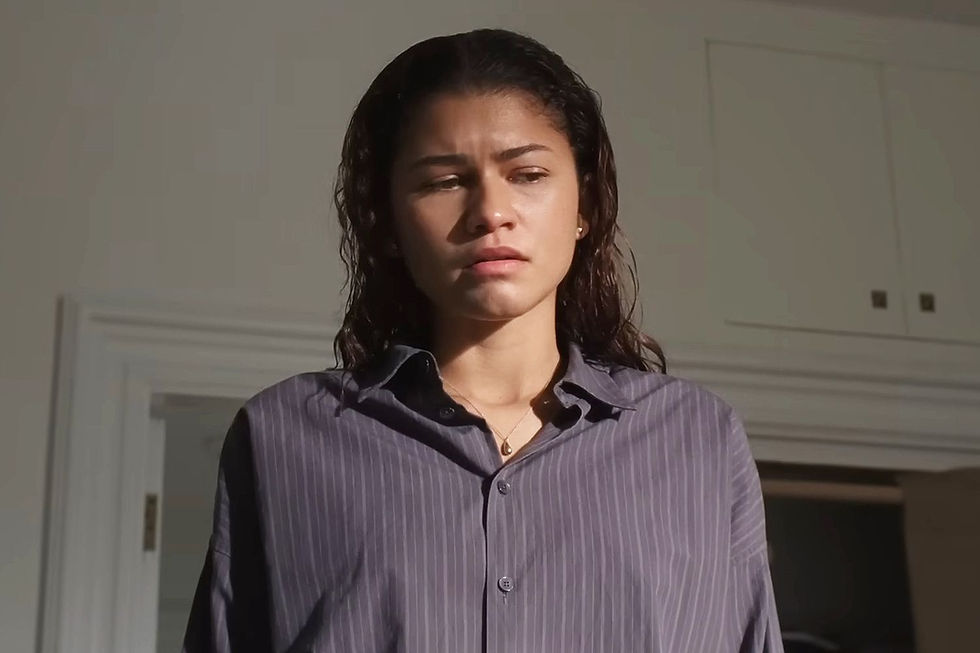
After watching the film, I immediately went to social media to see what people were saying. I was bewildered to see that nobody had felt any horror towards Emma’s younger self, and her lack of understanding towards the gravity of the situation as she’d gotten older. Because she chose not to go ahead with the shooting, this gave her a few brownie points. She had redeemed herself slightly, unlike Charlie and Rachel. I felt very confused as to why people sympathised with Emma so much upon Charlie’s reaction. What she had experienced prior to the wedding must have been very uncomfortable, but a school shooting is not the only available outlet for your depression. There are much easier, and less graphic approaches to feeling content within yourself. He had just found out that his fiancé was almost a school shooter, and nobody seems to understand how horrific that must be to come to terms with. It takes a lot to understand that she has clearly grown from her past, but his search of proof was not fulfilling. The difference in sympathy for her compared to Charlie is very concerning.
I noticed a lot of people not only slander Charlie for not letting go of his judgements, but Rachel too. From the beginning of the film, we see that Rachel is a judgemental force of nature. Her comments towards Emma often sound self-righteous, and it’s difficult to even comprehend that the pair get along. I believe that Emma’s lack of defence is a result of her wanting to remain validated by others and avoiding the catastrophe that comes with loneliness. Rachel’s character is annoying from the very beginning, so I didn’t find my opinion towards her changing much following her confession. What she did was horrible, and she clearly lacked remorse. However, the audience’s choice to compare what she did with Emma’s plot, and even state that what Rachel did was far worse, is baffling to me. To me, both are bad people. I wouldn’t choose to be friends with either of them. However, the assumption that Rachel’s disgust towards Emma is pure projection over her own malice, is absurd. Regardless of whether we have done things that are immoral, we will always keep our bias when choosing ‘which bad thing is worse’.
Rachel is obviously going to feel terror over Emma’s school shooting plot because her cousin was injured in a school shooting. As audiences, we have this experience ourselves. The bias occurs in everyday life. I might find certain acts of malice ‘worse’ than others because of personal experiences, and so might you. Conversations like this are rare in our own lives. I don’t know anyone who has done anything as bad as Rachel or Emma, and that is why we can’t argue that one person is worse than another. Whilst I was more horrified with Emma’s confession, I believe that’s due to many reasons. One being the theatrics and character responses surrounding the confession, which added to the horror of it all. Rachel’s aggression towards her, as well as the anecdote about her cousin, really allows for reality to sink in. When we know people that have been affected by certain things, our opinions become skewed. Rachel has every reason to feel anger and resentment towards Emma. She has categorised herself with those who have caused harm towards Rachel’s cousin. But more people agree that Rachel’s confession was worse because she chose to act on it. Whilst it was clearly an impulse out of confusion and stress, it was a very bad decision to make, and the harm caused could have been unforgivable. Whereas Emma did not act out of impulse, but genuine desire to harm. Although she did not do the shooting in the end, I still use the word ‘act’ because the plot was a clear indication of her insanity at the time. That malice and lack of humanity was, to me, on par with the actual act committed by Rachel. Whilst one was impulsive and disastrous, and the other was malicious but not fully conducted, I believe they’re both terrible, and there’s no reason for comparison. But the comparison has already been made, and I think it’s an interesting indication of how audiences choose to make judgements now that we know it isn’t productive to throw around the term ‘cancel’.
Cancel culture has caused a fault within the approach to criticism online, and in person. A few years ago, if anyone did anything slightly offensive or immoral online, the instinct would be to ‘cancel’ them. There was no room for personal growth, just a punishment of living under the label of ‘cancelled’. This, during Covid, was a punishment of the highest order. There was never any leeway for understanding or empathy towards those who may have done something wrong in their past. Even figures who were well liked had been slated for their actions in childhood - which is difficult to comprehend given that the generation to encourage ‘cancelling’ are also defending Emma. Cancel culture gave control to those sat at home, with nothing to do but scroll through TikTok. People had their platforms taken away from them and were mocked for the idea to apologise and make amends for their actions. Basically, if you did something wrong at any point within your life, that was unacceptable and you were unable to move past it. It’s ironic because in real life, this isn’t how people behave with their peers. When people cheat or say offensive things, whether you’d admit it or not, we’re likely to move past it depending on our loyalty to that person. Cancel culture was a devotion that far too many people to an interest to. We don’t know these people online, yet there are communities of millions of people who wish to abolish your presence in the public eye.
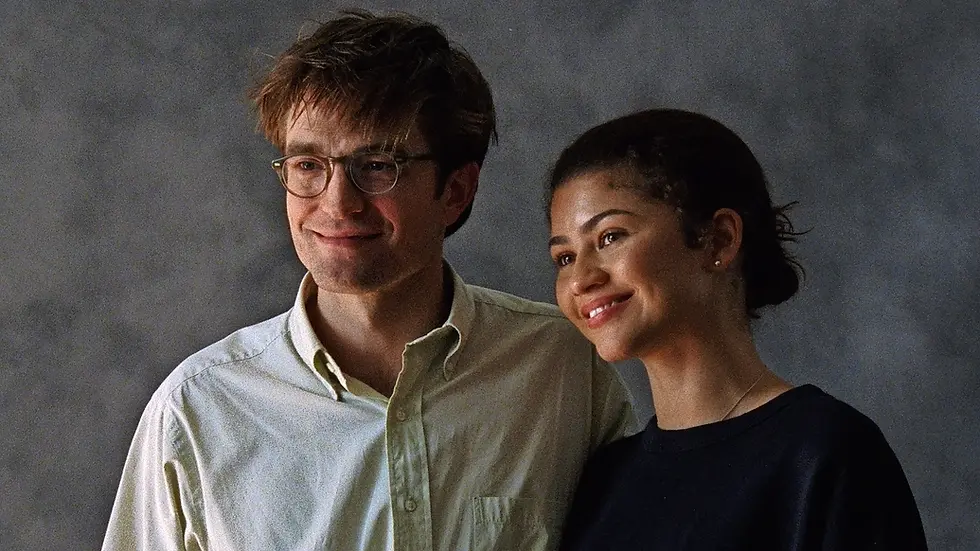
I believe the superiority that we, as an audience, feel towards those who have been ‘cancelled’ is the reason why cancel culture became such a phenomenon throughout the early 2020’s. Moral superiority has caused people to enjoy the wrongdoings of others, and who doesn’t want to feel good about themselves? The issue lies within the individuals who rely on the actions of others to validate themselves. Observing someone’s fall from grace and contributing to the public backlash, to reassure yourself that you are incapable of doing any wrong, isn’t progressive. Truthfully, cancel culture was never beneficial for anyone. It encouraged the ideology that personal growth isn’t accepted within society, and if you make any mistakes, you can’t be forgiven. We viewed these figures as characters, rather than humans. In real life, if someone did something terrible, there is a high likelihood that they would still have friends, a job, and a life to enjoy. On social media, this was never considered. You’re expected to lose everything, and your career was over. It was never considered that this punishment was perhaps more problematic than the behaviour itself.
If someone came onto TikTok in 2020 and admitted to planning a school shooting, there would be uproar - and rightfully so. Even in Emma’s case, if it was fifteen years ago, people would still be mortified. It is interesting how Emma’s behaviour is tolerated despite it being an example of potentially the most valid excuse to ‘cancel’ someone. I don’t believe this is due to the death of cancel culture, but the way it has evolved through the years. There is more understanding and sympathy towards those with mental health issues, and that’s what we agree to be the ‘perfect’ victim. Emma had a tragic teenage hood which led to her psychotic fantasies. Rachel, on the other hand, never expressed any reason to lock the child in the basement - aside from pure ignorance and fear. There was no sob story on her side, which is what led viewers to empathise with Emma instead. Whilst the drama surrounded Emma’s confession, her mental health excused her actions from audiences. Five years ago, the film’s writers would have been criticised for writing a character with such graphic fantasies. That’s how serious people were about their own moral superiority. Now, we see a victim in those who have done bad things, unless they aren’tthe ‘perfect’ victim.
Rachel is not the ‘perfect’ victim. She showed zero remorse towards her actions and remained jarring throughout the film’s duration. Objectively, her story is less worrying than Emma’s. As an audience, we can pretend that we didn’t bat an eyelid at her confession. But there’s a reason why it was written into the film. No normal person plans a school shooting. Period. When there are four bad people in a room, we want at least one person to victimise, because nobody wants to root for protagonists who aren’t good people. We are supposed to feel conflicted over her confession, just like Charlie was. Everyone’s immediate defence proves that black and white characters are expected now more than ever. Characters who aren’tgood people aren’t welcome on our screens anymore unless it’s outlined that they’re a villain. Audiences don’t want to feel conflicted over someone else’s actions. Who wants to question their own morals? That’s why I believe this film is the perfect release for a post cancel culture society. Our own beliefs are being tested and people hate that. It’s healthy to often question “should they be forgiven?” instead of expecting a reason for their behaviour which is only ‘valid’ according to the internet. People are still unable to form their own opinion, and that’s something I don’t think will change for a very long time. Realistically, audiences should have made a judgement on each character without feeling compelled to rank who is worse out of them all and make one person a hero, and another a villain. Emma is not perfect. Her reaction to the Charlie’s confusion was unfair considering he’d just found out his fiancé was almost a school shooter. But she had to be put on a pedestal for everyone to classify Rachel as the bad guy, instead of just agreeing that they’re all flawed individuals. Labelling characters as ‘bad people’ reassures of our own morals, and we feel the gratification of our own moral high horse.
Writing this essay, I have felt conflicted towards my own opinions on Emma. Seeing her actions be defended has made me question whether I am a bad person for thinking she is flawed. But realistically, choosing to not villainise her and understanding that she is a complex character who isn’t written with the intention if being a role model, is the right way to go about watching it. I think that media literacy is a dying skill, despite it being a crucial driving force in our ability to articulate our own thoughts and opinions. We allow our opinions to be skewed by what we see online because no one wants to be the bad guy. Cancel culture has left us with this fear in voicing our own concerns in case everyone thinks differently. We’re not meant to strip characters of nuance. Emma’s character is not a role model, and we have proof of that. She is puzzling. That’s why the storyline was written. If the big confession was much smaller, there would be no reason for us to decipher whether she is worthy of being a protagonist. There’s so much fear in engaging with a character who is flawed, take Marty Supreme, or Hannah from ‘Girls’ as an example. Audiences hate an insufferable protagonist who isn’t explicitly outlined as a villain, because people just want to judge without questioning their morals. But if we never question our own morals, how are we meant to strengthen them?